
How to overcome the challenges of the ACCA journey
Are you planning a career in accountancy? A simple undergraduate and postgraduate degree in Commerce and Accountancy may not be enough. You should consider getting ACCA qualified to have endless opportunities for career advancements. The world economy is ever-changing and needs professionals who can upgrade themselves as per the company’s needs. An ACCA qualification will already be a step forward in that direction and give you a competitive edge over your peers. However, the journey to becoming a qualified member of the Association of Chartered Certified Accountants (ACCA) is a challenging one. It requires a significant investment of time, effort, and resources, and it is not uncommon for students to face a range of obstacles along the way. In this blog post, we will explore some of the common challenges faced by ACCA students and provide tips and strategies to overcome them. Challenge 1: Time management One of the biggest challenges faced by ACCA students is time management. Applicants often have to balance work, study, and social commitments. This can be a daunting task and it is very easy to become overwhelmed and stressed out. To overcome this challenge, it is essential to develop effective time management skills. The solution: Follow the recommendations given below to manage your time effectively: Create a self-study schedule: You should always plan your study sessions in advance and persists with this regular study schedule. This way you can utilize your limited time more efficiently. Firstly, set aside a certain time of the day according to your daily schedule, when you can devote yourself to studying for the ACCA. Prioritize your tasks: You have to juggle many important tasks throughout the day. In order to meet all your objectives prioritize your tasks on the basis of urgency and importance to you. This will help you to focus your time and energy on the most critical tasks and ensure that you make progress toward your goals. Minimize distractions: Anytime you make up your mind to study if your phone starts pinging notifications, it will eventually distract you. It will be better if you can switch off your mobile phone and other digital devices in your vicinity to minimize such distractions. Also, request your friends and family politely, not to disturb you at these certain times of the day. Challenge 2: Staying Motivated The journey to becoming an ACCA member can be as long as four years. Thus, it is not uncommon for students to lose motivation along the way. To overcome this challenge, it is essential to stay motivated and remain focused on your goals. The Solution: Follow these tips to maintain your level of motivation throughout the journey: Set clear goals: This will help you to stay focused and motivated and will give you a sense of accomplishment as you achieve each goal. There is nothing better than the sense of accomplishment you get when you achieve your goals. But it is vital that you remain vigilant and don’t lose your focus and motivation along the way. Hence, set clear and small achievable goals throughout your ACCA journey. Break down your study sessions: The huge pile of knowledge you need to learn for the ACCA qualification can often seem impossible. You should divide your study materials into manageable chunks. As you go along each chunk it will give you a sense of progress. This will also help you to avoid feeling overwhelmed Find a study group: Join a study group or find a study partner. This. You are not alone and can easily find a study partner if you look for one. Joining a study group can help you to stay motivated by leaning on your peers during challenging times. You can also benefit from the support and guidance of other students. Challenge 3: Technical difficulties Another common challenge faced by ACCA students is technical difficulties. This can include problems with internet connectivity, software compatibility issues, or lack of hardware. You need to be proactive and prepared before starting on this journey. The Solution: The following recommendations can help you overcome technical difficulties: Have a backup plan: Your current hardware can anytime break down or your internet connectivity may be obstructed due to technical faults. It is always better to have a backup plan if such situations arise. Test your equipment: Regularly test your devices for any hardware issues and software malfunctions. You can fix this on time and avoid technical difficulties during your study. Contact technical support: This is in conjunction with the previous point. Once you have detected an issue contact technical support as soon as possible. Also read: Computer Skills that must be known by every Commerce Student Challenge 4: Exam pressure Exams, especially competitive exams such as ACCA, can be a significant source of stress and anxiety for many students. There is intense personal pressure to perform well, and it is common for students to struggle with anxiety. To overcome this challenge, it is essential to develop effective exam preparation strategies. The Solution: Here are some tips to help you manage exam pressure: Develop a study plan: You must make a comprehensive study plan that covers all the topics you need to learn. Then break it into manageable chunks and devote particular hours of your day to preparing for each exam. Thus, you can avoid cramming. Practice past papers: It is recommended that you practice a lot with the previous year’s papers. This way you can familiarize yourself with the exam format and identify areas where you need to improve. Take care of yourself: Taking care of your physical and mental well-being is essential. You must eat a healthy meal, exercise daily and sleep at a fixed time to keep fit. Also know: 5 Productivity Tips for commerce students to prepare for the ACCA exam Conclusion The journey to becoming a qualified member of the Association of Chartered Certified Accountants (ACCA) is a challenging one. There are many obstacles that students face along the way. Follow our tips and ace your
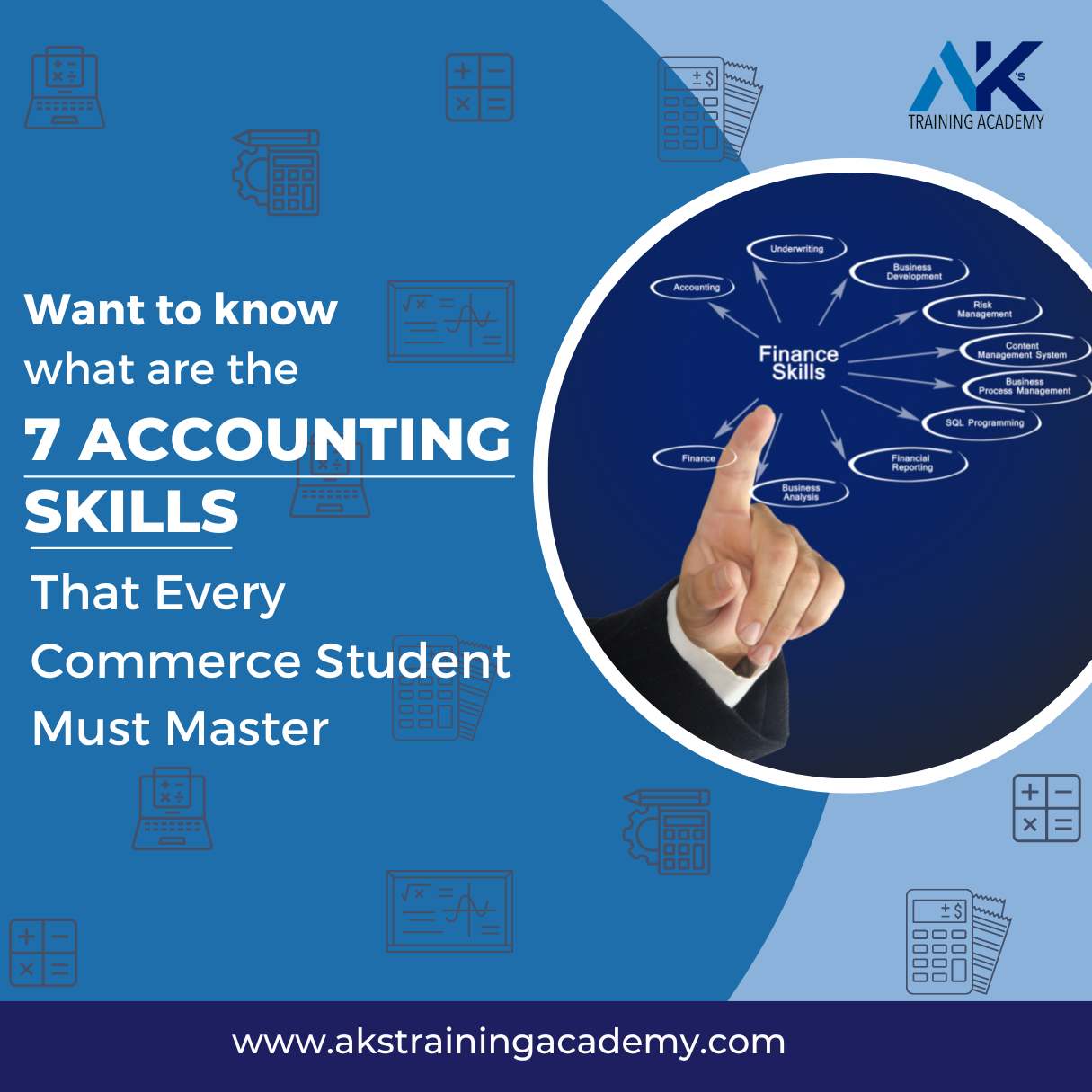
7 Accounting Skills That Every Commerce Student Must Master
Let’s talk about the accounting skills that employers are seeking for. Yes, we know you’ve spent hours and years studying for those mind-numbing exams. We have put together a list of theoretical and behavioral and technical accounting skills that you must hone before entering the JOB MARKET. Before the job interview, you must utilize this list as your CHECKLIST. Job Skills Required For Accounting and Finance Job In depth understanding of Accounting standards Regulatory Compliance General Business Software Proficiency Data Analysis Communication skills/ Soft Skills Executive Presence 1. Accounting Standards This is the right time to brush up your knowledge of IFRS or IND-AS or US-GAAP. Accounting standards are the set of rules that companies have decided to follow for their business transactions and financial reporting. And for any accounting professional this the most Key Skill needed for accounting jobs Things you need to study before interview : How Accounting Standards bring uniformity among the system Easy compatibility and comparison for the financial statements Compatibility for auditors How Accounting Standards can Avoid frauds and gross errors How accounting standards can act as guidelines for the accounting community 2. Regulatory compliance Regulatory compliance are set of rules and guidelines that guide day to day operations in a company and ensure that business is operating as per federal laws. It is crucial to understand the regulatory compliance that applies to your industry. It also monitors the organization’s exchange and security rules. Things you need to study before the interview : Compliance rules in payroll and human resources Rules while recording financial transactions Rules of industry specific Taxation Health and safety policies and procedures Welfare policies Material management Sales implications Legal issues Purchase implications 3. General business Accounting sectors mostly will collaborate with other industries and oversees business exchanges so one must have a general business knowledge. General business knowledge allows you to gain a basic knowledge about running finance, analyses a business report, etc. To run a successful business every professional needs to know how to manage with today’s guidelines and today’s competitors in today’s market Things you need to study before interview : An understanding of economic Data analysis skills Financial Analysis skills Networking Business management skills 4. Software proficiency: Accountants require proficiency among various industries and software is one among them . If you don’t know how to handle software, you basically will not be qualified for any job. Software’s used by accounts department: Microsoft access Microsoft excel Accounting & Payroll Process softwares ERP tools such as SAP, Oracle, etc. Also Read: Top 7 computer skills for commerce students required to get a job. 5. Data Analysis Do you want a clear picture of -where you are, -where you have been -and where you should go Then your answer is DATA ANALYSIS Data analytics allows accountants to analyze Credit Score, examine complex tax concerns about investment scenarios, revenue generated, net income, payroll costs, and many more crucial facts and figures Hence An Accountant or Auditor with knowledge of DATA ANALYSIS becomes a valuable asset to the company. It also increases the likelihood of obtaining a rewarding pay scale and well-regarded grades in the company. How Data analysis skill can benefit company : Monitoring and improving business performance Improving client experience Identifying and managing risks Generating higher profits and margins Cash flow analytics 6. Communication skills/ Soft Skills Auditors & Accounting professionals need excellent communication skills to succeed in their profession. Auditor / Accounts leaders must inform, educate, and influence stakeholders as well as earn their trust. And Effective communication will bring the desired changes in system So as a fresher, employers are going to give immense importance to how you speak or articulate your thoughts during the interview. Important aspects of effective communication: Clear and concise Factual Persuasive (Convincing & Influential) These elements contribute to verbal, nonverbal, and written communications. In short, your communication should motivate employees to take the desired actions. Peer group learning , debate competitions , essay or project or paper writing during your ACCA/ CA / CMA are going to help you immensely. 7. Executive Presence EP is easier to experience than explain. But recent studies have proved that the influential presence of an audit leader or Accounts Manager can enhance the audit results. An executive presence is -Authentic, -passionate and articulate -Credible So if you want to inspire that change or win the deal or convince the crowd then work on your “EP”…….A Must skill for an Auditor or An Accountant How to improve accounting skills? Try to gain practical experience (Fulltime / Part-time / Internship) Devote a time to learn data analysis Research your core subject dig deep !! Try to take coaching for accounting software’s Work on your communication skills and interpersonal skills (Write your thoughts, participate in debate discussions, and take writing or blogging assignments) Conclusion: We hope we have given you the ultimate list to Crack the Accounts or Audit Interview. Professional qualifications like ACCA , CPA chisel you into the best version of yourself. ACCA is among them is one such qualification which encourages you to explore the practical aspect of subject (and learn it in most fun way). Also Read: Top 7 Computer Skills For Commerce Students Required To Get A Job
Common Audit Interview Questions You Must Prepare Before the interview
If you are a commerce student aspiring to kick-start your career in the field of Auditing this article is going to help you prepare for your upcoming Audit Interview and know the audit interview questions from our experts. Before jumping on the most likely questions asked in Audit Interviews let us first crystallize on some basic concepts. What is an Audit? The typical textbook definition of Audit is – “An audit is an independent examination of financial information of any entity, whether profit oriented or not, and irrespective of its size or legal form, when such an examination is conducted with a view to expressing an opinion thereon” In simple terms, The audit is Independent examination of the financial statements of an entity. A major hint lies in this definition which is a direct requirement for hiring in the field of Auditing i.e the Independence of the Auditor. Types of Audit There are various types of Audits conducted in an organization. A simple way to classify them is based on the basis of Independence involved in an audit or interference of the client. The basic classification is as follows: 1) Statutory Audit: Statutory Audits are conducted by Independent auditors who are appointed by the company or board of directors. This audit has a high level of Independence. The manner, content and time lines for conducting the audit and submission of audit report is governed by the respective Statutory Acts applicable. 2) Internal audit: Internal audit is done by an auditor who may or may not be an independent auditor, the auditor is appointed by the management and depending on the needs the scope is mutually decided in the terms of engagement. What is Internal Audit? “Internal audit is an independent management function, which involves a continuous and critical appraisal of the functioning of an entity with a view to suggest improvements thereto and add value to and strengthen the overall governance mechanism of the entity, including the entity’s strategic risk management and internal control system.” In simple terms: An internal Audit is an Independent appraisal activity within an organization. The internal auditor reviews the activities and processes of the organization and provides suggestions for improvements. The scope of internal audit is not restricted to financial transactions but also extends to the review of all operations of the enterprise and it evaluates the effectiveness of management. Going through the above basic requirements for an Audit role it can be concluded that the Employer will be desirous of hiring an Individual with the following personal qualities / characteristics. Honesty and Integrity Straight Forwardness. Unbiased in making decisions and reaching conclusions i.e has the ability to think independently and does not get influenced by others. Maintains Confidentiality. Has the ability to communicate confidently. What do you mean by the Independence of the Auditor? The auditor should be independent of the entity subject to the audit. The auditor’s independence safeguards the auditor’s ability to form an audit opinion without being affected by any influences. Independence enhances the auditor’s ability to act with integrity, to be objective and to maintain an attitude of professional skepticism. The objective of the audit is to express an opinion on the financial statements. The person conducting this task should take care to ensure that financial statements would not mislead anybody. This can be done by him by satisfying himself: The accounts have been drawn up with reference to entries in the books of account The entries in the books of account are adequately supported by sufficient and appropriate evidence None of the entries in the books of account has been omitted in the process of compilation and nothing which is not in the books of account has found a place in the financial statements. The information conveyed by the financial statements is clear and unambiguous. The financial statement amounts are properly classified, described and disclosed in conformity with accounting standards. The statement of accounts presents a true and fair picture of the operational results and the assets and liabilities. After revisiting the basics and understanding the ideal requirement from the point of view of the recruiting organization let’s now move to a few of the common Interview questions asked in Audit Interviews Common Interview Questions for Statutory Audit Interviews: Tell me something about yourself or walk me through your resume covering yourself and the family background? Can you describe the process followed for conducting a statutory audit? What do you mean by the term “Material misstatements”? What are the types of Audit Opinions? Questions on IAS/IFRS/IND-AS: Qualified CA / ACCA fresher’s can be expected to summarize any of the IAS / IND AS in a short span of 10 minutes the most frequently asked IAS / IND AS are as follows: IFRS 115 / IND AS 115 – REVENUE FROM CONTRACTS WITH CUSTOMERS IAS 16 / IND AS 16 – PROPERTY, PLANT AND EQUIPMENT IAS 8 / IND AS 8 – ACCOUNTING POLICIES, CHANGES IN ACCOUNTING ESTIMATES AND ERRORS IAS 10 / IND AS 10 – EVENTS AFTER THE REPORTING PERIOD IAS 2 / IND AS 2 – INVENTORIES IAS 12 / IND AS 12 – INCOME TAXES 1. Questions on AUDITING STANDARDS: Qualified CA fresher’s can be expected to summarize any of the Auditing Standards in a short span of 10 minutes the most frequently asked Auditing Standards are as follows: SA 300 – Planning an Audit of Financial Statements SA 315 – Identifying and Assessing the Risks of Material Misstatement through Understanding the Entity and its Environment SA 230 – Audit Documentation SA 320 – Materiality in Planning and Performing an Audit SA 570 – Going Concern SA 550 – Related Parties SA 700 – Forming an Opinion and Reporting on Financial Statements SA 705 – Modifications to the Opinion in the Independent Auditor’s Report Questions on Work Exposures in accordance with the resume: Give us a brief about the roles and responsibilities handled by you? Tell us about few of your key audit findings?
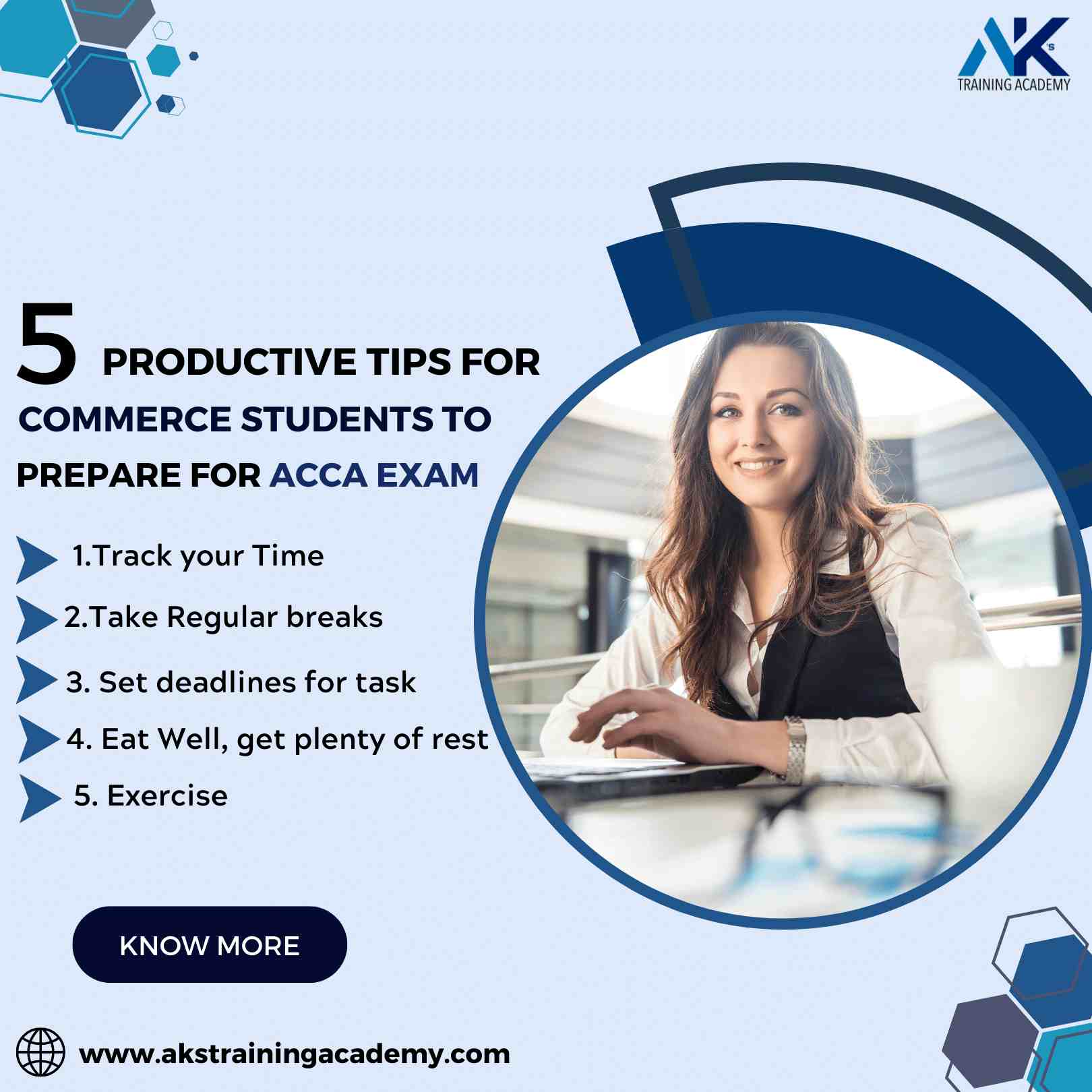
5 Productivity tips for commerce students to prepare for ACCA exam
If you are reading this, then let me congratulate you for choosing the best professional course around the globe : ACCA (Association of Certified Chartered Accountants). In this article, we hope to give you some golden productivity tips while preparing for the ACCA Exam. Study productivity tips: Get the result you want in your Acca Exam. When you choose these courses, we believe you understand the level of dedication and sincerity required to achieve success. Hence, you have also created the necessary study environment around you. As a ACCA aspirant you have gathered all the resources like study material, test-mocks support, mentor, notes etc. to ace your ACCA exam You have prepared and perfected your ACCA study timetable also! But wait, are you positive that you will strictly adhere to the study timetable for your ACCA exam? If you are not sure, then we suggest you work on your productivity first. What is Productivity? Productivity is a measure of how efficiently a person/ student/ employee converts inputs, into outputs (e.g Sore or Result, Product, Service etc) Here understanding INPUT in the context of student is very important. The Input can be: Attention, Grasping of concepts Study material, Notes Effective Mentor or Coaching institute Consistency, Discipline Motivation The majority of the items on this list are personal or behavioral characteristics. If all of these factors come together, the result is a desirable score, result, product, or service. To summarise, while planning your studies, you must also work on your productivity in order to complete your tasks on time. What are the 5 productivity tips for students who are about to take a ACCA exam. 1.Track your Time Tracking the number of hours required to spend on a particular task or subject is very important. This will help you to devote meaningful time to tasks. And you will be able to finish the work efficiently. 2.Take Regular breaks Believe it or not, taking a regular break increases productivity. Students who cram for hours at a time do not perform at their peak. By pushing your mind beyond its capability, you only experience greater stress and fatigue. You can use the pomodoro technique or work for 25 minutes with a 10-minute break. 3. Set deadlines for task Setting a deadline is part of self-discipline. If it is not urgent, make it urgent!!! Set a realistic timeframe. Give priority to the task and deadlines. This technique is going to keep you ahead at every point. Following a deadline will always help you to have a free time for other things. So start designing a timetable with deadlines. You are giving yourself two extra days to make up for anything missed during those five days. 4. Eat well and get plenty of rest. Eating healthy is going to impact your cognitive function. Good food not only helps to boost energy, but it also keeps the mind calm. Include fruit in your breakfast, followed by a nutritious lunch and a light dinner. While coffee or tea may appear to be refreshing at the time, excessive consumption can lead to sleep loss or acidity. The best way here is to take a snack break. (have chana, makhana, fresh juice or just sip H2O) After all, we are what we eat! Last but not least, get your 7-8 hours of beauty sleep. After all, it’s the only detox that is going to replenish you with energy. 5. Exercise Yes, you heard it right. Exercise can boost your productivity. Increasing your heart rate regularly with a daily exercise routine gives you a “get up and go” kind of attitude. Exercise also makes you alert and receptive. A healthy, exercised person can learn and grasp more than a person with a sedentary lifestyle. A simple walk can reduce stress by 60%. So whenever you feel overwhelmed by the syllabus or studies, just close the books and exercise. We hope that these pointers will be useful to commerce students studying for the CA, ACCA, or CPA exams as they attempt to climb the mountainous syllabus. If you are feeling stuck at any point please contact us @ [email protected] Also Read : Career in ACCA certification-eligibility best-institute If you are studying for ACCA exams or CPA, we strongly suggest you keep your pen and paper away and start working on your laptop or PC. Conclusion: So to conclude, we would like to say that each student has a different study pattern and that’s perfectly fine. It’s just that the study pattern should be effective. Also Read: 6 Things CA, ACCA and commerce students must learn and grasp during Articleship or PER

6 Things CA, ACCA and commerce students must learn and grasp during Articleship or PER
Among many commerce careers CA, ACCA and CPA are considered to be tough. These courses necessarily require dedication and serious effort on the part of commerce students. Articleship or practical experience is a vital part of these courses. And as CA, CPA we suggest students to take these 3 years as an opportunity to test the practical aspect of everything learned in theory. So, are you putting in the same effort in your articleship that you did in your studies? If No then this article is for you. Want to know why Articleship and PER(Practical Experience Requirement) is important for commerce students: Articleship or PER is an opportunity for commerce students to apply and check concepts practically. You will have the opportunity to confront real-world scenarios. Practical experience is going to help commerce students in Interviews Dealing with clients Dealing with government authorities Developing the right interpersonal skills Practical Application in work Also Read: What are the ACCA job opportunities & salaries across the world? 6 Important things commerce students must observe, grasp & learn about Articleship or PER(Practical Experience Requirement) 1. Dealing Government Offices Taxation-ITR , legal code of conduct and many other operational matters in business are directly connected to the government. Hence An accountant or auditor is expected to be familiar with all government formalities. And as a commerce student you can learn those during your internship. 2. SOPs of Taxation & Audit Meeting deadlines is the most important part in any accountants or auditor’s life. As an intern at a CA office you can understand the exact way to work on Taxation & Audit with multiple clients. Commerce students can learn about income tax provisions and laws and efficient ways to work on them in clients’ benefit. There are numerous techniques or methods which one can learn on the job. 3. Documentation & excel skills Arranging documents in precise sequence and chronology is a skill that can only be learned through practice or by watching someone else do it. Students will also learn Excel and other accounting software. Commerce students can devote time to learning all of these things from experienced individuals at the firm. These systems are used for more than just accounting; they are also used for forecasting and decision making. On their first day of work, commerce students will be expected to demonstrate these skill sets. 4. Communication and interpersonal abilities For an auditor or accountant interpersonal skill and command over language matters the most. Why do we say so ? Because Auditors are in charge of communicating reforms, changes, and mistakes to immediate managers and, in some cases, superiors. As a result, accurate and clear communication is critical. Changes that an accountant or auditor anticipates may necessarily involve harsh reforms. It is critical in this case to communicate with them as effectively as possible. Commerce students can learn the essentials of communication from superiors at work or principals. Audit ethics is a vital part which you must observe and learn if you want to be an auditor or accountant. 5. Make mistakes, and don’t be afraid to ask questions When you are entering into a real work scenario you have an opportunity to work you concepts and solve your doubts. Your seniors will also love to respond to your queries. After all this experience is going to help you during a job interview. 6. Very Very Important do not lose focus from studies during PER or Articleship Last but never list! Being a student you still have to clear those papers. Do not lose your focus from studies. After all, clearing your exam is the ultimate goal. Also Read: Is ACCA course worth it for Indian commerce students? Know about ACCA career scope & Job Opportunities. Conclusion: The points we have mentioned here may appear to be very basic to you, but each point is unique and important, with 1000 things to learn beneath it. Now you know as a Chartered accountancy student what you must do in your internship or articleship.
Why CA Must Do CPA Course? Know More about CPA Course.
Certified Public Accountant (CPA) is a universally accepted classification and a highly regarded certification/designation in the accountancy industry all over the world. In short, just like CA (Chartered Accountant) is a designation provided by the Institute of Chartered Accountants of India (ICAI), CPA is a designation given by the American Institute of Certified Public Accountants (AICPA). Now the question arises why one must even think or choose to do CPA Course after CA, well the simple answer to that is- CAs are experts in taxation, auditing etc. while CPAs are experts in many fields along with taxation and auditing like financial forensics, strategy making etc. The quest for CPA after one completes their CA opens a whole range of worldwide opportunities and makes them eligible to work in foreign companies, MNCs and other institutions that look for the CPA certification as a must. CPA helps broaden the spectrum of a CA and makes them experts in multiple fields within accountancy; this in turn generates better career opportunities and higher wages. Top 6 reasons why CAs must pursue CPA Course Acceptance and Recognition: Getting the CPA designation helps one get globally recognized and accepted. Even in India, many MNCs and companies look for CPA cleared accountants as they look for International Financial Reporting Standards (IFRS) and Generally Accepted Accounting Principles (GAAP or US GAAP) knowledge. Since globalization has boomed in India there has been a drastic increase in Indian companies looking for international accounting knowledge in accountants. Global Opportunities: Because CPAs are certified by the AICPA, they gain preference by MNCs and have the freedom to practice globally. By being internationally recognized, you get better salaries and perks and also are known as a dual-certified professional which brings a favoring addition to your profile. CPA course is globally recognized because accountants who clear this course gain knowledge of accounting practices and standards which are universally followed and practiced. Convenience: After one clears their CA in India, clearing the CPA is relatively easy and less time draining. Learning and understanding the CPA syllabus becomes easier under the right training and less time taking after clearing the CA. Once the CPA course is cleared, you understand and can work in different spectrums like forensic accounting, Tax, and Financial Planning, Assurance services, Internal and external auditing, etc. making you multi-faceted with additional knowledge and skills. Specialist Services: In some specific areas, only CPAs can give services and not CAs. Hence clearing CPA after CA makes you a specialist in many ways which paves the way for your career to sustain better. CPAs guide companies through assessments of risks, revisions in handling data and technology etc. The CPA certification gives windows of opportunities to work for big leagues and earn hefty amounts of money. Career Security: Having cleared the CPA, one will never have to worry about job security as clearing the CPA course gifts you with additional skills and knowledge that is always on the lookout by companies and MNCs. Just by doing CA does not assure you big pay or security, but having dual-certification in CPA does. The wide array of skill sets that CPAs learn and understand easily makes them in high demand because that knowledge and practice is globally followed. During harsh or rough economic times, CAs are the most affected and that too an average one. Having the CPA certification on your side keeps you floating even during economic crisis. Endless Learning Opportunity: Since the digital era has hit the accounting industry, the role of AI, significance of IT and continuous changes in tax codes makes learning a never ending loop for accountants. Because of the dynamic nature of the finance and accounting industry, the procedures, laws and regulations are in a constant shift. Since CPAs are at the top of this industry, it becomes a duty to know about the changes and shifts in the accounting sector of the world and this keeps duty keeps the CPAs up to date and boosts the knowledge and profile of an accountant. With this we have covered the crucial and meaningful aspect of why one must clear CPA after clearing their CA. CPA Course Exam Pattern The CPA course exam consists of 4 tests or papers, which can be completed in 18 months or less depending on one’s pace. But for a CA completing this course becomes relatively easy. (CPA Subjects and syllabus) Cost of CPA Course / How much CPA course costs in India? For an Indian student, the overall price of the US CPA Course Exam procedure is sometimes divided into three parts: Cost Of Training: The typical training costs for a live CPA course are closer to INR 105000–115000. The advantage of this is that the recorded videos may be viewed an unlimited number of times, and there are 6500 MCQs and 3000 SIMs that can be used to assist candidates pass the 50% objective CPA test. Evaluation Fees: The evaluation fee, which is payable to the assessment agency to determine eligibility to take the CPA examination, is approximately 22000–23000 INR. Exam Fees: Approximately 185000 INR totals the exam fee plus the cost of the foreign examination. Hence, the typical price in India for the full US CPA programme is between 3.5 and 3.6 lakhs INR. CPA Course Eligibility Criteria : US CPA needs 5 years of education from a recognized institute. They call it the CPA Credit score. Many institutes assist students in evaluating their performance. You will be advised to apply in a specific state based on your score. (US state) CPA Course Duration In order to complete the curriculum, a student must pass 4 papers in 18 months. Candidates will qualify for the CPA Certification if they receive a score of 75 percent or above. Candidates and applicants have to complete their course within a span of 18 months. Job Opportunities For CPA Qualifiers / CPA career opportunities CPA Course truly opens up the world of opportunities. CPAs work on strategically important units in organization.